
Top tips for business and life!
Want some tips from people who are running a business?
Drive the Network members (our Drive Tribe) are constantly learning about running a business and how to live a good life. They love to share what they learn.
The Index Card of Power is an idea from Adam Brooks, illustrated by Anne-Marie Miller.

Big thanks to Drive Tribe Members for their words of wisdom! What's your favourite?
- Don't try to do everything in your business yourself. This is guaranteed to stop you growing. Your business will be more effective if you delegate the tasks you're not so good at to specialists in that field (you can always learn from them so it's not 'giving up' in that area).
- Don't be afraid to ask for help (look at the amazing help and contributions the Drive team give each other all the time. Often something that seems huge and impossible to you is really no biggy for someone else,
- If you're thinking of making an online course or any digital product, *start* with the marketing - make sure people will be prepared to pay for your course beforeyu write and record it. Really understand what they want. Even better, run it first as a series of webinars so you can listen to questions and incorporate the answers in the course. Also, with a webinar if nobody signs up you haven't wasted much time.
- All businesses need to be dynamic. It's not enough to do what you've always done. Continuous improvement and changing with the times are the only way to guarantee success and longevity.
- It´s impossible to succeed alone. Involve people in your business.
- Listen to your clients. Listen to other people in business. Follow what's happening in your area. Don't be afraid to say, 'I don't know'. And the Drive Tribe is an amazing resource. Check out the Learning Hub.
- Quick fixes are like trying to put a band-aid on a broken leg, they often break more than they fix.
- If you can't work out what you're doing, find someone who listens properly to explain the whole thing to. You'll probably find it's the process of explaining it that provides the insight you wanted, not the person you're explaining to.
- Never underestimate the power of self care, whatever that means to you. It might be a daily or weekly break or perhaps a bigger break less frequently. It might be for your body, mind or soul. Big, small. Expensive, free. Know what works for you and you'll work a lot better.
- Know your numbers. How much do you need to invoice to make it worth getting out of bed in the morning? Never discount. If you need more money put your prices UP - you'll attract much better clients. And remember - you're not running a charity!
- Automate as much as you can, whether it's using your accounts software's repeating invoice functionality, or setting up rules to automatically file client emails in the right folder and add the task to your to do list. Just because things need to be done it doesn't mean they need to be done by you (or even by a human!)
- Make sure you have your payment terms and bank account details on your invoices. Sounds obvious, but make it as easy as possible for people to pay you!
- Value yourself! Value your time, your health and your worth.
- If you are happy to pay someone else for their services, ask yourself why you feel awkward charging people for your own!
- Don’t sit down all day! Build regular movement into your day. Walk, stretch, workout, cycle, dance, play, do classes. Your health, wellbeing, creativity, productivity and business success depend on it. Do what feels right so that it revitalises you. Listen to your intuition.
- People buy from people so spend time being interested and curious about other people even if they're not your obvious market. You never know who other people know and if they like you they'll recommend you.
- You get what you pay for.
- From a 'big picture' perspective, move on from things that don't work for you quickly, rather than holding on for too long. That doesn't mean move on when things get difficult; but do so when you know they're not for you.
- While you can't buy time, if you know your 'worth' per hour, you can automate, delegate & outsource tasks which 'cost' you less so you concentrate on what does make a difference to you and your business.
- Be true to yourself...on every level, if something doesn't feel right, it won't be right. Identify what it is that makes you happy about the 'work' you do. As you develop your business sense check that the 'happy' factor still exists and fulfils you. If it doesn't, make changes. Do it and do it quickly, politely and efficiently.
- Don't look back at the what if's.
- Remember to pat yourself and others on the back for all the things we have achieved this week - and to not just focus on the ones we haven't!
- A desire for control can turn negative when we feel helpless. By learning new skills, feeling worthwhile and coming up with effective strategies, we can move forward with a healthy level of control.
- You really do get what you focus on. If you tell your brain that your focus is X it'll quietly steer you in that direction. The flip side is that what you don't focus on doesn't get done.
- Downloading tasks from your brain onto paper or an on-line tool will free up bandwidth for your brain to do its thing.
- Some people either don’t want to listen or just want to give their opinion no matter what.
- Learn to love selling because it’s about sharing what you offer rather than forcing people to buy something they don't want!
- If you surround yourself with and collaborate with awesome business people, then you can achieve great things! It’s important to have a strong team - a virtual one is just as good - and a bank of experts you can call on in times of need.
- "You have to prime the pump first", which is to say don't expect the good stuff to come up straight away, at the start of your endeavour. Get used to producing unusable stuff and don’t look at early attempts and assume you’re not up to the job! Keep going and keep getting better.
- It's all about who you know... sharing, helping, supporting and working with other like-minded people.
- Laughter and fun are just as important in your working day as anything else, sometimes more so.
- Time and space are simple elements which we need to offer ourselves to step away from our busy minds and daily missions and use to reflect on other matters.

An Introduction to Xero by Emma James
Emma James, aka The Number Ninja, takes us through a step by step guide to getting set up with cloud based bookkeeping system Xero.
If you have any queries for Emma, please contact her at The Number Ninja
How to pitch a story to journalist
Press releases are more effective when you follow the rules!
Most businesses would like to get press coverage and, believe or or not, journalists need us to tell them what's going on.
The trick to getting your news noticed is to make it easy for the journalist!
 That's why we asked award winning journalist and communications expert Rachel Extance to give us some tips - and we got a lot a more!
Rachel helps businesses to draw people in and communicate with them so that they become loyal customers, fans, and advocates.
This is the transcript of the Ask the Expert session.
What comes first?
Q. Before writing a piece is it worth making contact to see if there is interest or do you send the article in first to gauge interest?
Rachel Extance Send an email setting out what's it's about and asking if it's of interest. Look up who is the best person to send your email to or ring up the organisation and ask them.
Q.Typically how many words should an article be?
Rachel Extance A press release should ideally fit on one side of A4. It needs to be clear to the person receiving it what it is about and why it is of interest to their readers. If you would like to write something more in depth (or you would like the publication to) then have a chat with them about the potential.
Q. Is there a format one should follow. Not layout, but structure e.g. summary, beginning, middle, end?
Rachel Extance Make it clear from the start what your story is. Are you holding an event? Have you invented something amazing? Or is it a human interest story, in which case focus on the person's story and set the scene. Put a note at the end saying 'for further information' with your contact details and any brief notes you think will be helpful like a web address where they can see your organisation or a line or two about what you do. Always include your email address and a day time contact number.
Attention grabbing headlines
Rachel Extance-Virr A headline should be short and to the point. The journalist or a sub editor will write the headline which goes on the final article. So for local interest, something like "Cambridge woman climbs Everest to raise money for Addenbrooke's", or if you're going for something more general: "How one woman overcame her fear of heights to scale Everest"
Q. When pitching a story, are there things to avoid? What do journalists particularly dislike?
Rachel Extance Don't ring up and say: "I'm just calling to see if you got my press release". Don't format your press release oddly or use pdf. It needs to be possible to copy and paste it. Don't use double spaces.
Avoid jargon and make sure you spell check it. I have seen press releases where the name of the town was incorrect or the person's name was written two different ways.
They will welcome a well written press release about a local event or company as long as it is of general interest to their readers. Try to follow their writing style. Include a quote and a good picture.
Q. Is it best to put press releases in the body of an email rather than as an attachment?
Rachel Extance Put it in the body of the email and then you don't need to worry about an attachment getting lost.
Who to approach
Q. Is it worth researching different journalists before approaching them?
Rachel Extance Yes. Get to know who is the right journalist to approach. Unless it's a very small publication where one or two people write everything, they will each have a different role. On a local paper this could be looking after different geographical areas or a subject matter like education or health. On larger publications they will write on a particular topic or for a certain section. If you're not sure who is the right person to send your press release to, ring up the paper and ask who deals with the topic.
Q. Are there any tips/tricks one can use to capture a journalist's attention?
Rachel Extance It needs to be a good story. Make it grab the heartstrings or talk about something which they can see is of value to their reader. Be helpful. If you read a newspaper/magazine regularly you will spot there are columns like 'A day in the life...' or 'My morning routine' and they will need people to fill these slots. Find out who compiles the column and send them an email saying why you would be a good fit. Don't just look at the business ones. You will find ones about music tastes etc. Spot the opportunities.
#JournoRequest
Rachel Extance Most journalists are on Twitter. You can develop a relationship there. Also keep an eye on #journorequest on Twitter. This is where journalists sometimes ask for help.


Top tips for great press releases
Rachel Extance Here are my top tips:
- Do your research. Make sure you are familiar with the publication you are pitching to.
- Pitch to a journalist. Most journalists are on Twitter or you can ring the publication up and ask who deals with the topic or section you are interested in.
- Keep up with the news agenda. What’s happening? Can you offer a useful point of view?
- Look for ways to be helpful. There are often slots to fill which a journalist will welcome someone putting themselves forward for. Look for regular columns like ‘a day in the life of…’ or ‘a moment that changed me…’.
- When you outline your story make sure you cover who, what, where, why and how. If it’s an event, don’t forget when. You’d be amazed how many people don’t put the date and time.
- Make sure the story is clear from the start. Don’t bury it in the 3rd paragraph - or worse, the second page. (There shouldn’t be a second page.)
- Focus on people. If you can tell a story about a person, whether that’s you or someone you have helped, this is a great way to create an emotional connection with your subject.
- When is the deadline? Get in touch in good time. This could be two weeks in advance or for magazines it could be months. Work on Christmas really does start in the summer.
- Include a good quality picture. If you are pitching to TV/radio outline what will lend atmosphere to the piece. No-one is interested in talking heads if it can be avoided.
- Follow up. If you pitched about an event, whether it got coverage or not, you have a second bite by sending them pictures and a report afterwards.
- Blog. I saw someone the other day say they got national coverage because a researcher saw their blog. It means when the journalist is checking you out, they can get an idea of what to expect from you.

If you'd like to get more help from Rachel, contact her at Rachel Extance Communications Consultant and on Twitter @RachelExtance
How to deliver great presentations
How do you deliver a presentation that really engages your audience?
We've all sat through those presentations where we feel trapped by a dull presenter, someone who reads their slides, too many umms and ahhs and no idea how long it's going to drag on for!
Nobody wants to be that type of presenter!
That's why we asked Drive member Jon Torrens to give us some tips on how to deliver great presentations!
Jon uses a unique combination of insights from the worlds of computer game design and stand-up comedy that enables even the most introverted to deliver presentations that enhance their professional persona and both delight and motivate their audiences.
This is a transcript of a live Q&A from the Ask the Expert session.
What's a good way to open?
Jon Torrens The first few seconds are your opportunity to grab your audience or lose them. Try hitting them with a question. No intro, no "Here's what I'm going to talk about". Find out beforehand what matters to them (pain point) and ask them directly what bothers them the most about that particular issue.
I like start with a stand-up comedy technique of saying hello and talking to individuals about minor details of the moment, such as where they're sitting. This is what I like doing, but the controversial statement is another good technique.
Something personal and unique can be good, such as a photo of yourself in a very different context, to show your true passion and humanity.
TED Talks are a brilliant resource: you can see that people generally talk about important things, with passion, and have REHEARSED it loads. The really casual-looking speakers are usually the best rehearsed.
Speed of delivery
Q. Is there a good rule of thumb when it comes to speed/words per minute etc?
Jon Torrens Recording yourself (video or audio) to get a sense of the pace works well. Good advice is 'slow down for the important bits'. In my experience, people rarely speak too slowly. Never go over your time limit; rehearse, timing each run through, then cut the material to fit.
Ann Hawkins When I did a lot of broadcasting and podcasting we worked on about 150 words per minute. It's a good place to start then you can cut or expand as you time it in rehearsal.
Jon Torrens The timing is crucial. You should know where you should be at any given point, e.g., slide 3 starts at 9 minutes and I'm at 10 minutes already - better skip a bit.
DIVIDE UP YOUR PREPARATION TIME CORRECTLY. By this I mean spend the first half creating the material and the second half rehearsing it.
Make sure you can deliver the thing without any slides. Sounds tough but it will help you only include slides that illustrate your knowledge rather than adding to it.
I thoroughly recommend trying different PowerPoint templates too! There are loads of 'em and they do a lot of work for you (and therefore save you loads of time) in terms of fonts, colours, interesting backgrounds etc.
Story telling
Jon Torrens INCLUDE A STORY. Makes a helluva difference to your content and delivery. It also makes it much more interesting and memorable for your audience.
Q. I'm listening to an audio business book and what I noticed most was the author has used stories all the way through. He doesn't tell you his view, he tells you stories about what others have done. It's a really good technique.
Eye Contact
Q. I know its important to make eye contact when speaking but what’s the secret to staying locked and focused?
Jon Torrens Eye contact and smiling is the best way to engage the audience - it convinces them of your ability and confidence even if you feel nervous and inadequate. It also tricks your own subconscious into thinking 'I'm good at this'. Being 'in the moment' can be hard when you're worrying about what's coming next, so rehearsal is your friend, as it helps you focus on your delivery and not trying to remember all your material. You should feel some fear, but you need to embrace it and turn it into excitement.
How much rehearsal?
You may have noticed that I bang on about rehearsal - it's the key stage that people skimp on or miss out entirely.
Q. Can you share some rehearsal tips e.g. is it best to just do it in a room by yourself with a timer? Find an audience?
Jon Torrens I walk around in a room with a timer on my desk. Get a trusted colleague to watch you once you've already run through it 2 or 3 times.
Scripts and notes
Jon Torrens Start with some key words for the different areas you'll cover, get that edited and sorted and THEN create the slides. Very important.
Use cue cards and have one keyword or phrase for each minute or so of speaking, in a large font so you can read it easily from a few feet away.
You should know what's coming next on the slides instead of having to using them as a prompt and NEVER EVER EVER read your slides out loud! It's the thing that annoys audiences the most! It's best if they don't have any words at all!
Panic, fear and nerves!
Q. How do you deal with the panic/fear just before standing up to speak. I know breathing techniques and rehearsal help, but anything else?
Jon Torrens I find that practising my first line works well.
Fear is a vital part of the process, feeling nervous is normal and a good sign.
Your fight-or-flight instinct will be pushing you to move, and I find speakers who move around more interesting.
Video yourself and experience the horrible realisation of all the stupid things you do such as fidgeting. Then get over it and try to stop doing them.
Q. A lady I met talked about standing as if you are Wonder Woman / Superman and then relaxing into a less formal version. That sounds like a fun way to take control of the presentation!
Jon Torrens I like to imagine myself as Tony Stark or Bruce Wayne.The idea is that you do it BEFORE you get up to speak, though.
A big finish
 Jon Torrens DO NOT trail off with a "So... I think... yeah.. is that my time.. so yeah.. is that... OK, thanks."
Give them your killer closing statement, your callback to your killer OPENING statement, hit them with a call-to-action that ties it all together. Then wait, look directly at them, smile and say... "Thank you."
Give people a chance to give you a round of applause (it makes them feel good as well as you) and after that, ask if there are any questions!
Get more help from Jon on how to improve your presentations at www.jontorrens.co.uk and follow him on Twitter @JonTorrens
"I wish I'd started networking sooner"
This is just one of the the things Rory Underwood shared with Drive Members!
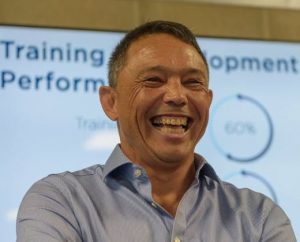 Rory Underwood, 85 times capped for England, 49 tries, was not only one of the best wingers in British Rugby, he was also a Hawk Fighter pilot for the RAF.
Rory shared how he retired from rugby and the military in his late 30s and embarked on the task of building a business.
He learned many things about high performance teams and human development and now brings that experience into businesses, challenging them to create the right environment where high performance is inevitable.
In this frank and funny talk Rory demonstrates his warm and charismatic character and also the difficulties and obstacles he encountered in growing a business.
Build a network as soon as possible!
One of the things Rory mentioned, and why he came to Drive, is that having a great network is essential to building a business and its never too soon to start building your own network!
How do you measure the effectiveness of a team?
Most teams are measured on results but that doesn't tell you what (or who) needs to change in order to become more effective.
The speed at which we get information can cause us to react too quickly and over correct, often before we know if there is a pattern or just a short term glitch. Waiting and assessing before taking action can lead to much better decisions.
There are lots more tips about team roles, measurements and how to improve effectiveness in the talk below.
Some other points that Rory mentions are:
Make yourself redundant
The sign of a great leader is knowing when to step aside!
What's the ROI?
The challenge for any business is switching the thinking from ROI (return on investment) to ROE (return on expectations) This is what a successful training initiative delivers to key business stakeholders demonstrating the degree to which their expectations have been satisfied.
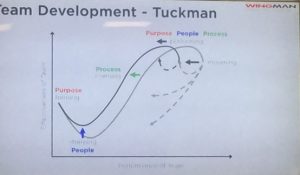
Purpose People Process
The PURPOSE of the team is established in the process of Forming.
As PEOPLE join they start Storming
The PROCESS is established during Norming
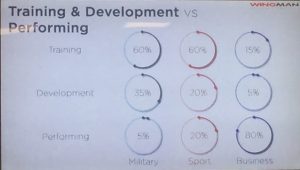
Training and development vs Performing
There is a huge difference in the ratio of training and development vs performing in the Military, Sport and Business.
In the military, Training and Development is 95% and Performing is 5%
In Sport, Training and Development is 80% and Performing 20%
In Business, Training and Development is 20% and Performance 80%
This begs the question that, is people are the most important part of a business, why isn't more invested in their training and development?
To find out more about Rory Underwood and the services he offers businesses see his website Wingman Ltd
Are you the worst boss you've ever had?
You start a business to have freedom and choice
and then you turn into someone who works all hours, can't switch off and is permanently stressed!
This is such a common habit with business owners that we asked Drive Group Leader David Brown of Potentiality Coaching to help us find ways to be kinder to ourselves and get the life we really want from our businesses.
This is the transcript of a live Q&A.
Q. I was asked if I'd had a good Bank Holiday. I said I'd worked some of it and they asked what I did. I quickly replied and added - "Seriously, I need to have a word with my boss, she's taking the mickey now."
David Brown It's easy to forget that when you run your own business, you can take bank holidays whenever you want. Just because everyone else is working, doesn't mean you need to. You can schedule work for when you are most productive.
Q. Is the real problem not that we can take time off whenever we want to but that we can't switch off even when we're not working?
Q. I totally agree, sometimes it's difficult to switch off and remove yourself. That said I have learnt (the hard way) that doing this even if it's just for a short period, will bring you back refreshed and MORE productive. Knowing when you're not being productive and stepping away is the key.
David Brown Absolutely. Productivity wanes when we are "on" all the time. We need breaks. You seem to have this sorted better than most Andy. Your experience has given you much great wisdom.
Getting organised
Q. So many people get completely overwhelmed by their business. What’s a good way to deal with that David?
David Brown Be organised. I was working with a client this morning and he came up with a strategy that really works for him when he is overwhelmed. Spend the time first thing in the morning or even last thing at night and make your lists and prioritise.
This gives you the time and space to let your mind range over things. When it is relaxed it works much better than when it is continually stressed. You'll think of better solutions that way and generally be more aware of more things. It also stops you fire fighting.
Q. Also, when something is written down and recorded our spongy brain will stop spending energy trying to remember it. Instead it can focus on bigger thinking.
Q. That planning should include holidays! Not necessarily long periods away, but half days or days where you have activities planned and you go and do them. For me the days that I take off are really useful, I always come back refreshed and often with fresh thinking about a problem or issue, as a result of not sitting at my desk festering about it.
Switching off
David Brown It takes practice to switch off from the business. If you don't everything suffers. Your health, your well- being, your relationships AND your business. Practice being PRESENT. Don't be with your kids or partner or friends and have one eye on your e- mails. They do not feel you are with them. This is all a bit touchy feely I know, but it bloody works. If you can only be with them 30 minutes, better your full undivided attention for 30 minutes than 3 hours of mediocre time, don't you think? Research shows that people cannot multi- task. Undivided attention is what gets that laser sharp focus. You are more lightly to get better results and quicker that way.
Q. I have (in the past) felt tied to the business unable to switch off and get away. Hand on heart it's not good for you on just about every level. Hindsight is a wonderful thing I know, I recognise that there will always be times of intense work/production - some of that is outside of my control/influence. I've also learnt to manage expectations better. If you always say 'yes' and deliver the goods to unreasonable time lines you set an expectation that this approach is accepted (though never acknowledged verbally etc) and it's the beginning of the end as you have lost control.
David Brown Anything will do that clears your head and makes you feel refreshed. A walk, workout, cup of tea, read a book. We are not machines, we are people with ebbs and flows in our day and in our minds
Managing time
Q. So, when working for oneself, if an hour passes in a heartbeat, how can I run my business AND have choice and freedom?
David Brown Great question Louise. You run a business. You make choice. You embrace freedom. It all starts with choice. It is SOOOOOOOO simple, almost too simple, so people overlook it. If you had an hour what would you choose to use it for in your business? It's time you're never getting back. How will you make it count?
Q. Although I know the theory, putting much of it into practice is really hard. I like to help people and I know I should put me at the top of that list but I tend to slip down with more frequency than I'd like. Is practice and discipline the answer?
Q. I can completely empathise Louise, I find the same thing even now and it can be really hard to say 'no' and put yourself first. But often these seemingly important must have things aren't anywhere near as 'must have' as you were originally told. People build in wriggle room, often more than is necessary, so it's worth asking the question about the real timing for delivery and also giving yourself some breathing space.
Q. This is where it’s important to remember the type of business you run. If you're in business to respond to clients as and when they need it (first line support) then that's what you need to do but settling boundaries and client expectations is key. If people want to jump to the top of the queue and expect you to be available whenever they need you, they need to pay more than people who are prepared to wait! After that, it’s about how much you work for others and how much you work for yourself (biz growth etc), not forgetting all the other roles you play in your life that may take priority!
Mind and Body Connection
David Brown The mind gets to the end of something naturally. Either the task is over or you run out of steam. If the task is over and you have energy to move on to the next thing, move on and be even more productive. There will come a time when the mind will stop. That fuzzy, hazy feeling when you feel restless. That's the signal for the body to step in and give the mind some rest and stimulation in other ways. That's your cue for exercise. It may not be convenient, so take the next ideal opportunity.
Q. Is there evidence that concentrating on something that is not business - exercise, playing music, art, etc., is as beneficial as meditation for example. I know a lot of people can't get to grips with the idea of "emptying the mind".
David Brown Meditation is focussing on one thing. The Japanese Tea Ceremony is that kind of meditation in movement. Running, once you get into a rhythm, is meditative. Your mind goes somewhere else and is free to think without you being aware of it. That's why you have the answer to your problem after your run. The same applies to all kinds of things that promote that single focus. The Moving Meditation courses I run promote that sense of focussing the mind, opening to awareness and enhancing creativity and productivity.
Guilt!
Q. Any tips for how to feel better about giving yourself permission to have down time? As the business is me I often feel quite guilty if I have the downtime I was happy to take when I worked for someone else.
David Brown The business is not you Emma. You are so much more than your business and so your business only sees a fraction of who you really are. You need to take care of you as a whole if you are to give all you need to your business.
Q. Knowing the theory and actually being able to put it into practice are very different things! I'm very good at beating myself up about absolutely everything, but I think considering how much time I want to spend playing each of my roles will be very useful.
Take Control
Q. I often hear business owners refer to their business as a baby, in constant need of attention. But, even parents get baby sitters to have time off, don't they?
David Brown Thanks all for your questions and insightful contributions.
Please do not lose sight of your life when you are in business.
None of your success, wealth or kudos matter if you sit alone in a bedsit on the weekends because you did not have time for your friends, partner, children etc.
This is your life.
Go out and enjoy the things you love.
Take the time.
You owe it to yourself, your business and the people you share your life with.
Use your business as an opportunity to create the life you really want for yourself.
Create it.
Don't hope its going to happen without focus and determination.
Take control and choose the life you want to live and that includes your business and the freedom it can give you if you let it.
For more great information on how to take control of different aspects of life and business sign up to David's blog at Potentiality Coaching
Getting to grips with bookkeeping
No-body starts a business to do the books!
It's a job most business owners hate but if you understand the numbers in your business you stand more chance of making a success of it!
We asked Drive's very own Number Ninja, Emma James MIAB to give us some basic tips to make business life easier.
 Emma provides remote bookkeeping and accountancy services to freelancers and micro businesses.
This is a compilation of the live Q&A in the Ask the Expert hour.
What if you just don't like numbers?
Ann Hawkins If people really, really hate dealing with numbers and can't / won't employ a bookkeeper, what's the very minimum they should be doing Emma?
Emma James
- Keep all receipts
- Record all income
- Create a cashflow forecast, even if this is really basic, so you at least know when you might run out of money
And keep a record of things like mileage and how much time you spend working from home.
Emma James I know most business owners hate dealing with the bookkeeping side of things, but spending a little bit of time regularly keeping on top of things will make things so much less stressful in the long run. Don't leave everything until it's time to do your self assessment.
What are you using to run your business if you don't know your numbers?
Getting started
Q. What is a good app/program for getting started with keeping track of business finances?
Emma James I think it depends on what you want/need. I'd always suggest starting with dedicated software straightaway rather than using Excel, as it just makes things so much easier. I think Xero works really well for most businesses, but if you're a sole trader it would also be worth a look at Quickbooks Online for the self-employed. The main thing is to keep track of everything that goes through the business, so income and expenses. I personally encourage recording expenses on the go, using apps such as AutoEntry, ReceiptBank, or the Xero app, as you're much more likely to record everything if you're doing it as soon as you've handed over money!
Using cloud software such as Xero and Quickbooks means that you can put your bookkeeping at the heart of your business. Integrations with things like Capsule CRM, Zapier, POS apps mean that you're essentially building up the big picture of your business.
What's all the fuss about Xero?
Q. I hear a lot about Xero. What do you think?
Emma James I’m a big fan, it’s the only software I use. The main plus for me is how well it integrates with other software, such as AutoEntry, Zapier, Capsule, etc. The reporting templates are really good, and you can also edit these to make custom reports. They have a free 30 day trial, so I’d suggest having a play around.
Q. For the numpties (me), how easy is it to set up software like Xero? Is this something best done by a ninja?
Emma James It's certainly possible to do yourself, particularly if you're pretty savvy about your business and willing to do a bit of training (Xero's training videos are great). But I'd normally suggest a session with someone like me as we know lots of little tips and tricks, and we can also help you to think through exactly what you want to get out of Xero so that you can get the information in there in the right format. You could just put all outgoings in the General Expenses category, but that's not going to be that useful if you later want to know how much money you've spent on pens!
Q. Lots of software make claims that it's easy to set up, you can do it yourself. But with accounts, it's just not that simple. I mean WTF is a general ledger and a day book and all that stuff my decrepit father tried to explain to me. Experts know this stuff and they know where things need to be "filed". Do you like doing the initial set up? Having someone like you to do the set up would make the world of difference to small businesses and their financial stress levels
Emma James I really enjoy the initial set-up, it suits my process-driven brain. If I'm also going to be working with them on a regular basis it's also a really good way of getting a good insight into their business. I also enjoy integrating it with other things that will help them, for example Capsule so that they can see within their CRM who still owes them money.
If you already have information in something like Xero then you can normally generate a cash report that will show you how money flowed through the business in the last year, which you could use to help identify possible trends and so plan for these.
Oh, oh, Cashflow!
Emma James I really recommend using a cashflow forecast. Without one you don't really know where your business stands. I wrote a blog about this a while ago https://thenumberninja.co.uk/.../why-everyone-needs-a.../
Ann Hawkins Great advice Emma. I know a lot of people who have made a success of their business who check their cash flow every day before they do anything else. It only takes a few minutes but can save a lot of hassle and nasty surprises! Is there a particular template you like use?
Emma James I prefer to tailor it to the business, but a pretty good starting point is the template on the Startup Loans website. https://www.startuploans.co.uk/free-cash-flow-forecast.../
I use mine religiously. No decisions are made until they've been run past forecast!
Forecasting seems to be a real problem area for accounts software. I think this is because people are generally looking backwards, at least for things like VAT returns and statutory accounts for limited companies. But looking forward is really important as that's the one thing you can change! There's some really good software available that integrates really well with Xero (and I think Quickbooks and others too) for forecasting - Futrli and Spotlight are the main ones I'd suggest looking at.
Keeping receipts
Q. Am I ok to keep digital copies of receipts or do I need to keep the paper copies too?
Emma James Yes. HMRC have said that they will accept either hard or soft copies of documents. The key thing is to make sure you get a receipt in the first place, how you then keep that is entirely up to you. I personally store mine digitally (I do this for personal documents too) and then upload to Xero.ssentially building up the big picture of your business.
Q. Is having the digital receipt attached to the expense is sufficient? I also save a copy in GDrive. Am I doing overkill?
Emma James I do both because I like a belt and braces approach, but as long as you have a copy of the receipt you're good. If you were ever to be investigated by HMRC they'd be looking to see if you had kept good records, they're not overly bothered how you do this.
Claiming expenses
Emma James If you haven't already, please please please please separate your personal and business expenses. Please.
Q. Do people try to claim for personal expenses on their tax return? :)
Emma James It's often a case of not having a clue come the end of the year as to what the expense was! The majority of people who come to me with their tax return are actually not claiming enough, rather than too much, which isn't ideal either!
Q. Great Advice Emma. This caused me a world of confusion in year one when I was sole trader. I kept using the wrong bank accounts, multiple bank accounts, yada yada yada. Then, the world got simple when I used just one bank account for all business stuff and a separate one for personal. And now it's even more simple because the contactless cards mean I rarely use cash. Hoorah!!
What else does a bookkeeper do?
Emma James I'm slightly in the middle of a traditional bookkeeper and accountant. As well as the typical bookkeeping tasks of recording expenses, invoicing, chasing payments, payroll, etc. a lot of my time is spent helping people get the information they need to make decisions. So maintaining cashflow forecasts and budgeting. I also provide training on Xero, either because someone wants to be better informed to do their own bookkeeping or because they want the knowledge to work better with their bookkeeper/accountant.
Emma James I also do quite a lot of self assessment returns, which would typically fall under accountancy rather than bookkeeping, but I absolutely love these.
Q. I include myself in this: Why are we all doing something we find difficult, causes anxiety, takes us away from fee earning work and, if not done properly, receives a fine?
Emma James I think part of it is that it's really personal letting someone look at how well your business is doing/not doing. But external help can identify problems/opportunities much quicker as they're not so invested in it.
Bookkeeper or Accountant?
Ann Hawkins Just to finish off Emma - what's the difference between a bookkeeper and an accountant (apart from the hourly rate!)
Emma James The lines are being blurred, but generally speaking a bookkeeper will do the more day-to-day stuff, so recording ins and outs, chasing late payments, VAT returns, and possibly payroll. An accountant will prepare the year end accounts, and help with tax planning.
If you'd like to ask Emma anything about bookkeeping or the tips mentioned in this post, you can get in touch at The Number Ninja
Sink or Swim? Creating a business from something you're good at.
Is it a good idea to create a business from something you love doing?
Ed Williams first swam solo across the English Channel in 2006 aged 19 raising in excess of £60,000 for Prostate Cancer Research.This was the launch pad for a life dedicated to swimming.
Using the publicity he got from this he set up the Elite Swimming Academy Ltd which has a unique approach to excellence in swimming. Hiring only the best coaches and keeping classes to just 3 or 4 children, the Elite Swimming Academy has expanded year on year, always has waiting lists and is hugely profitable. Ed has personally coached Paralympic champions and other who have unique challenges with swimming.
Ed has continued to set himself challenges and has swum several other iconic marathon swims including Lake Windermere and the Gibraltar Strait. In 2016 Ed completed a solo swim of the North Channel between Ireland and Scotland raising £10,000 for Wateraid and Great Ormond Street Children’s Hospital.
Setting goals
His latest and greatest achievement to date is swimming the Irish channel - a goal that has nearly killed him.
Ed shares how he deals with these massive challenges that to many people would seem just too big, too overpowering and all consuming, and achieves his ambitions.
There have been unexpected challenges along the way, both personal and professional, Ed has learnt a lot about himself, his team and those who are closest to him, his family. He shares his personal insight into the best ways to address set backs, why it’s just not real to succeed at everything first time and the important learning that a perceived set back will bring to many other aspects of your life and your business.
Tools of the trade
Mindfulness, fitness, clear thinking and focus have helped Ed achieve his extreme challenges. There are lots of similarities between Ed’s extreme swims and the business world. Doing these activities has taught Ed a great deal about business and is a fundamental part of the success of the Elite Swimming Academy. After all, how many businesses do you know who launch with a swim across the English Channel?
Building confidence from the inside out
Confidence. Do you fake it, own it or overdo it?
We all suffer from lack of confidence at times so we asked David Brown, Group Leader of Drive Huntingdon and owner of Potentiality Coaching how to build authentic confidence from the inside out.
David has a lifelong interest in living organisms and has a BSc in Biochemistry, an MPhil (Sci) and has worked in neuroscience research at Cambridge University. He now specialises in helping people to make the mind body connection to build confidence.
This is a compilation of the live Q&A in the Ask the Expert hour.
Define Confidence
Q. How do you define confidence, David? As in when you "gain confidence", what changes in or about a person?
David Brown The word confidence comes from the latin "confidare" which means truth. Confidence comes from living your truth. Living with integrity, honesty, authenticity. Coming from this place you feel more powerful, you look and feel more confident and are at peace.
This is the essence of confidence from the inside out. What is your truth, your integrity, your justice? Violate these and you lose strength and belief in yourself. I physically demonstrate these in my Moving Meditation classes as way of showing how important it is to hold to your values and truth.
When people speak about confidence, they think about faking it until they make it. I'd rather work with the person where they are right now, with all their strengths, doubts, fears, skills and talents. We can still be successful and have fear. We can still be content in life and have doubts. I think it’s important for people to get a handle on what truly drives them, and that gives them confidence to do what needs to be done regardless of the doubts and fears they might have.
Peaks and troughs
Q. Confidence waxes and wanes (for me anyway) - how do you know when a peak or trough is more than just the natural cadence - what would you look for as triggers to do something about it?
David Brown Yes, I think confidence does wax and wane. If you step out of your comfort zone, you will inevitably feel nervous about taking action. I think confidence comes from doing these things anyway over time, and showing yourself through example that you can do it in spite of your doubts and fears. If your confidence wanes for "too" long, perhaps you are stepping too far out of your comfort zone and so it feels overwhelming. Try choosing something less challenging.... take the first, small step and build from there.
Q. How much confidence does one need to have?
David Brown Perhaps an easier question to ask is "How do I achieve what I want in life?" By taking the steps required, you build in confidence over time which builds you up to take on the next challenge. It is an ever growing thing I think.
Q. I find it's easier for me to do something challenging if I have a clear goal. And I allow myself to make lots of mistakes by doing something new and learn from the process
David Brown We learn most from failure and making mistakes. Often this is confused with lacking confidence or worth. A reframe is often important for people to allow themselves to grow.
Trust
Q. It must be difficult for someone to realise or accept that they need help with confidence, and a whole level of trust needs to exist for them to come to you David. It's not quite doctor/ patient but not far off. How do you manage that stumbling block?
David Brown There is nearly always an obstacle to people making changes. They find it challenging and resist it because they have an investment in keeping things the same. I ask people, “What is it costing you to stay as you are? Is it your career, your relationship, health etc.?” They have to see the benefits of changing because it’s not easy, although the results are worth it! Confidentiality is essential of course and everyone I work with is assured of that.
Coaching confidence
Q. In my role as a Recruitment Consultant, I am working with people every day with confidence issues. I think that many of us associate being confident with being loud and 'out there'. People that aren't naturally that way inclined sometimes describe themselves as lacking in confidence, when that's not the case at all.... How would you advise me to coach someone that has written themselves off as having zero confidence; how could I get them to take action to recognise traits in their personality that actually DO show confidence, just in a different form...?
David Brown I might start with getting them to review what they have achieved and begin the process of seeing every little success as something to celebrate. Getting people to recognise and reward themselves for these is essential. It builds self- confidence and appreciation for one's own gifts, talents and abilities.
Over-confident?
Q. What suggestions would you be able to share for working with someone who is so confident that they are perceived as arrogant by others?
David Brown Confidence is a balance. True confidence has presence that gives other people space and freedom to be themselves. If it stifles other people and makes them feel small it is not true confidence - it is arrogance. These people have work to do on themselves to be more vulnerable and visible and open to others.
Arrogant people need to be heard. That can be hard. Realising they are actually lacking in confidence and trying to cover it up is really helpful. Seeing it from their perspective and getting inside what is really going on helps too. In martial arts, the most scared people are the ones that are most arrogant and showy. It’s the same in life. Be kind, be gentle and strong and firm and they will relax and feel less like they have to prove themselves.
Q. I like the martial art analogy. I use a tool called Mastering the Art of Vebal Aikido to help people to be more assertive which is really effective as it is emotions based.
Finding your Happy Place
Q. I’ve recently spent a lot of time with a client helping them to communicate the benefits of gardening as a therapy to reduce stress, improve mood etc., etc. Do you have any particular tips for ways to help people find their happy place? I find walking my dog a really good way to clear my mind, re-organise and prioritise what I need to do. Sport, pilates and mindfulness are all other great tools I use too.
David Brown The mind / body connection is very important. When we strengthen the body the mind feels more confident and vice-versa. This is reflected in the way people perceive us and affects our energy and our presence and much more.
Courage comes from Coeur, the French for heart. Living from the heart and being passionate about what you are doing can give you real confidence.
If you'd like to explore any of theses issues in more depth you can contact David at
www.potentialitycoaching.co.uk
LinkedIn David Brown
What's your strapline?
Famous brands have famous straplines.
- Just do it.
- Think different.
- Every little helps.
- It's the real thing.
- The ultimate driving machine.
- Does exactly what it says on the tin.
- Vorsprung Durch Technik.
- Made to make your mouth water.
- Gives you Wings.
- Have a Break.
- Probably The Best Larger In The World.
- Never knowingly undersold.
- Because you’re worth it.
- Looks like yesterday - sounds like tomorrow*.
I bet you can name most of the brands that these great straplines describe (*I'll forgive you the last one - it's for the Fender Stratocaster Guitar!)
Wouldn't it be great to have a strapline for your business that makes you instantly recognisable?
Drive member and brand expert Andy Boothman, (who created the Drive branding), hosted a live Q&A to help Drive members create our own memorable tags.
This is a compilation of the live Ask the Expert hour.
What's the point of a strapline?
Q. Does a company really need a strap line?
Andy Boothman That depends on the company, what you do and how clearly that ‘doing’ is understood by your audience/customers. It’s really more about the development and growth of a business. If you want to grow, you’ll need more customers and/or more products, creating a positioning line gives you stand out or point of difference from your competitors. It reinforces what you have to offer.
Q. I think that thinking about a strapline is a good way of encapsulating for yourself as well as for others exactly what it is that your company aims to do. And that's a really good thing!
Andy Boothman It really is. Depending upon the type of business and the type of customers you have and want more of, having something short that describes quickly and clearly what you deliver will make a real difference to the business on lots of levels.
Q. Do you think that strap lines are becoming less effective in marketing?
Andy Boothman No I don't. There are many sayings that are used in everyday language that originated as strap lines. Our exposure is different these days as TV has lost it's dominance, but strap lines remain an important part of any brand communication, they are used on every piece of comms. Some strap lines have an aural signature too - Intel for example.
How do you create a great strapline?
Q. What broad approach works best for straplines; transformations made, opportunities taken or pains removed?
Andy Boothman The most important thing is to ensure that the people outside of your business understand quickly what it is that you do. And if possible what makes you different from the competition. Spending time looking at who your best customers are and what their honest view of the value you add is will bring clarity and focus to the challenge of your strap line.
Q. So perhaps asking customers, in their own words, "how are you different now as a result of working with me?" might help to generate some key words and phrases to work with?
Andy Boothman It will certainly help you to realise what the external perception is, where customers see you adding value and that will help focus the thinking around your strap line. It's hard when you're doing this yourself as you are very close to the business and your understanding of what you deliver is often too close to be clear and concise.
Q. How does a strapline work with the brand name? I'm wondering how much those famous straplines affects how well the businesses perform?
Andy Boothman The ones you remember tell you a lot about the success of those businesses. We are all exposed to countless messages every single day, you only remember the ones that resonate. So it's as much about talking to customers in the right place as it is saying the right things.
There are a number of different ways the two work together. Most often the strap line adds weight and clarity to the brand name. Straplines often humanise company names that would otherwise feel foreign or unworldly. You will notice that strap lines often change as a brand evolves. This can be down to many things, but often it is driven by competition. If a competitor starts using something similar or 'better' then you this galvanises action.
Andy Boothman There are subliminal messages/influence in some of these things. Personally I always look to create a positive, transparent message. Any comms will operate on a lot of levels, the secret is understanding what level to pitch at that feels right for the business/brand and it's existing customer base.
Does it work for any product or service?
Q. I am a sculptor and I aim to make work that viewers can relate to on a personal level. I use texture and form to invite people to touch the sculpture and build their own emotional connection to the artwork. I'm struggling to find the right concise description.
Andy Boothman Your art has a particular set of values and connects with certain people better than others. Understanding those people, their aspirations and what value they get from your work will bring clarity to the positioning piece.
Q. Can you give a good example of one that has human connection and is open to personal interpretation?
Andy Boothman One of the greatest values a strapline can bring is to add humour or other human characteristics to a brand/product. It's often referred to as 'a smile in mind' that moment when you read something, then 2 seconds later you re-evaluate what you've just read and smile - a priceless connection.
Q. How do you deal with people who don't like the brand/product/service and disagree with the straplines?
Andy Boothman You have to accept that you can't please/appeal to everyone. It's just not possible. Focus on the people that you have good connections with, make sure you understand what it is that they like about what you do and then communicate that likability out in a clear and organised way.
Avoid the cheese!
Q. How do you stop it sounding cheesy?
Andy Boothman We have touched on some of this already, but I'd strongly advocate thinking long and hard about what you have to offer your customers, talk to them about what they value from you, that way you will find a language that connects and is understood by the people who value your service the most, your existing customers. That should avoid the cheese. Also test your thoughts on other people. If they wince or squirm, it's time to rethink.
Q. What's your strapline for your business Andy Boothman? Do you mind sharing how you created it?
Andy Boothman My business is called “busy as A B, creating a buzz for your business”. I deliver all sorts of comms for various clients, both big and small, B2B and B2C. The common thread throughout anything that I do is the fact that people want to be seen, heard, and talked about. It's often referred to as a buzz. Bees buzz. Busy as a bee is a common saying. My initials are A. B. I created the first version while I was at college and have refined it over the years. I wanted something that had that element of an inner smile and broad appeal.
Q. It's a very clever name and strapline Andy! I love all of the connotations and the wordplay, link with your initials, onomatopoeia, etc.
I want a strapline!
Q. What sort of brief do you need from a client to get going? Is "I want a strapline" sufficient?
Andy Boothman That can work, but it's often part of a much bigger project. That said there are times when I am asked to come in and get involved in the specifics of developing a new strap line. The most important thing for me is clarity. Ensuring that the business has a clear understanding of its customers, that the internal and external perception of the business are aligned and that the people I am working with are open and honest. If I'm not given the full picture, warts and all, it's difficult to deliver the best solution.
If you've got any questions on business branding you can ask them in the comments below or contact Andy direct:
https://busyasab.me/
Twitter @AndyBoothman
Linkedin andyboothman
How to network on-line
Do you struggle with on-line networking?
Having a trusted on-line network is a huge advantage in business, and in life.
When you build a great network, not only do you have an immediate, trusted source of information and advice, you also have an army of people who like and respect you and are willing to help with word of mouth marketing - one of the most valuable marketing techniques that exists and one that can't be bought. It is truly priceless.
A side effect of having a great network is that you become a person of influence. You are asked to recommend people, products and services and your opinion carries weight.
Here are some tips about how to build such a great resource.
This is a compilation of the live Ask the Expert hour.
Starting a relationship
Q. What do you think the main challenges of networking on-line, for example, is it harder to build rapport with people (or conversely does it encourage people to trust others too quickly and lead to potential problems?)
Q. How do you start that on line relationship off? People say it's just like meeting someone in person. It doesn't feel like that to me!
Ann Hawkins I’ll take these both together as they’re similar...
Starting an on-line relationship is done the same way as a face to face one.
First impressions are just as important on-line as in person. A great photo and great introduction all help people to connect.
Then you look at what you have in common. Think of when you meet someone for coffee - you spend the first few minutes building rapport. It’s the same on-line but much faster and more honest. You can just click on the other person’s on-line posts and you’ll immediately see their character, personality and interests. Talk about the things you have in common, ask them questions (everybody likes talking about themselves).
Q. Some people see the screen as a barrier but it doesn't have to be, right?
Ann Hawkins That's true. People often reveal more about themselves on-line than they would face to face. You can spot people with a sense of humour, pedants, bores and much more just by reading their posts. The best part is, if you don't like what you see you can just click away, unfollow, mute or ignore them - much easier than in real life!
Q. Social proof is really powerful. You have instant access to check anybody out through their social proof, any con-artists, scammers etc are usually pretty easy to spot.
Q. For me it's about making friends which means being open and honest and, I find being me is the easiest least stressful option.
Ann Hawkins I've been friends with people on-line for seven or eight years without ever having met them and there is a huge amount of trust and genuine liking between us. As soon as you get to the stage where you've established real liking and trust, you get access to their wider network and as long as you are useful, interesting and show up regularly you’ll soon start to build a great network.
Show up regularly - in person
Q. I never really see how you can outsource relationship-making.
Ann Hawkins That's exactly it! Would you send an automated recording or yourself to a face to face networking meeting? No way!
You need to show up in person and be useful to your network on a regular basis. That means sharing their posts and tweets, making referrals, recommendations and introductions in a timely way. And answering when you're tagged!
If you’re in a group where people have discussions and ask for help, it’s a great opportunity to show your expertise or tag someone you know who can help. You should never try to take the conversation away from the group into a personal message or a sales pitch.
I’d recommend being present in person at least once a day. When you build a great on-line network it makes any marketing you want to do a lot easier. When people care about who you are and what you do they naturally want to help you. That's priceless!
If you only show up when you’ve got something to promote or sell, no-one will connect with you and they certainly won’t give you access to their wider network.
On-line helps face-to-face networking
Q. I am quite an introvert and the thought of attending a network event can often give me sleepless nights. Do you have any tips on how to control nerves and not look quite so tense at these type of events?
Ann Hawkins This is really where on-line networking can help the face to face experience. It’s one of the reasons why we've designed Drive the way it is.
Always check the attendance list. If you can see who is going to be in the room before you get there it helps a lot. I also like to connect with people on-line before meeting them in person - it makes the whole thing a lot easier when there is something more substantial than small talk to start a conversation.
Q. I always try to set aside time to do pre-meeting social connections. It means that you have a more productive experience when you meet face to face. This makes a HUGE difference.
Q. What information do you look for?
A. It depends on the event, what I'm hoping to achieve from meeting the person, whether they are a supplier, potential client, source of knowledge and insight. There are loads of reasons, sometimes it's just because they're interesting people and I'd like to learn/know more about a subject. Keeping an open mind is critical, just because someone is the CEO of a business doesn't mean that they will hold a great conversation, it's more about finding common ground, interest etc and expanding on those, not over thinking it and assuming by 'speaking' with someone that you'll get business.
Q. That makes me want to review my online profiles to see how I come across.
Ann Hawkins It works the other way round too: whenever you meet someone interesting face to face, connect on-line after the event and stay in touch in between meetings. It makes the relationship much stronger and the opportunities for wider networking are much greater.
Personal or business profile?
Q. On twitter, is it a good idea to have a separate personal handle for rants and frivolity, or is it ok to do that from your business account? Or does that depend on the type of business you run? I've recently stopped sharing and commenting on a lot of quite controversial stuff but really miss it.
Ann Hawkins How many real relationships do you have with a brand or a business account on Twitter (or anywhere)? Most people want to talk to people so the more you can be yourself the stronger the network you'll build. You may alienate a few potential clients but they're unlikely to do business with you for long if they don’t share your values.
Q. I used to have a work handle but binned it because I decided it was easier to be me, people know me, and if they don't like me, I'm OK with that. Also only tweeting as me prevents, most, alcohol related tweets and it gives people more chance to snout around my personal life and get to know me better.
Q. I struggle with this one. I am the person you will do business with, so I see the benefits of using my personal profile. But doesn't a business account help with people who are looking for a business, before they know me? For example, if I want updates from Dropbox, I follow their twitter account, not the account of their CTO or CEO.
Q. I think it also depends on how different your interests are. E.g. I was just talking to a friend whose interests and profession all fall broadly into the same category, so one account would work well. I'm into two different things that don't really overlap much (art/craft and creating online courses, well, I can see an overlap but that's just me...) so I've separated them out a bit.
Ann Hawkins If you are your business and it’s you delivering a service, most people will relate to you rather than a business account. However, if you have a product there is more of a distinction but most people will still like to know you as a person. Anonymous doesn't work. I think the problem is that people confuse on-line networking with social media marketing. They're two very different things.
A real network isn't just about business, it's about you as a person. The reason it can be incredibly useful when you have something to promote is because your trusted network will help you for no other reason than that they can. Word of mouth marketing by people who like and respect you is the most powerful marketing in the world.
Ann Hawkins is the M.D. of Drive the Network, a business mentor, author of New Business: Next Steps and has been networking and blogging on-line since 2005. If you have any questions about building a great on-line network ask them in the comments below or contact Ann at
http://annhawkins.com
Twitter @AnnHawkins
LinkedIn Ann Hawkins
Don't fear the chaos!
Do you ever feel overwhelmed by options and possibilities?
This is a common feeling for many business owners but chaos can be a positive force!
Darryl Canham shared his vast experience in business, advertising, marketing, sports and movies and his ideas about how, in addition to strategic focus, the occasional use of creating chaotic pressure can bring fresh ideas and innovations for both business and life.
The main thrust of what Darryl spoke about was the opportunities that become available to you when you open your perspectives towards making your life a success, as well as looking at making your business or career successful.
Generate lots of ideas
Whilst stressing the absolute importance of a strategic culture, Darryl explained that so many of his personal career opportunities and successes were the outcome of frenetic periods of generating many ideas and exploring their potential simultaneously.
So, by choosing to create chaotic periods of intense work output, business prospecting, decision making, and exploring opportunities, he has found that his career has taken shape in areas that were not a part of any original personal life plan. Both life and business have prospered because limits get pushed.
Unsettle the status quo
Darryl went on to explain that more focused styles of thinking are then the ways in which things get done and should sit as the mainstay modus operandi to business operations. However, unsettling the status quo from time to time will create a new energy that could be directed towards your ambitions.
Darryl related this Chaos tool to the early periods where entrepreneurs are in the early stages of building and defining their business. That is one of the most pressurised and stressful times, but also one of the most exciting times in the life cycle of any business.
Experiment with chaos!
Sometimes the business you plan is rarely the business you end up with. Settling for that is a personal choice, but by recreating the start up chaos scenario from time to time, may just create the opportunity you did not know you were looking for!
He acknowledges that it can be a step out of the comfort zone and for many people that may be a challenge. Even so he encourages people to experiment with a little chaos because you never know where the next great opportunity will come from and where it will lead.
He shared many stories and anecdotes from his experiences and many valuable life tools that keep his enthusiasm and drive as high as his natural energy.
Through his use of both strategic and chaotic practice, Darryl has ventured into many exciting industries and assures us he will continue to put it all into practice, whether he is working in health and fitness, in marketing and advertising, in the film business, or working with the police, in consultancy, professional coaching and more…
Darryl Canham has over 20 years experience in the development of people, athletes and brands. He managed 2 teams at McCann Erickson, and founded the successful advertising agency Rave Communications Ltd. He remains active in creativity and marketing consultancy for midlands agencies, but devotes most of his time to running the Kaizen Centre in Birmingham, offering martial arts, health & fitness, coaching and mentoring for his clients. His efforts and talents have led to him working with a variety of organisations providing training in confidence and empowerment with West Midlands Police and the Terrence Higgins Trust as well as corporate and small businesses. He also works in the Film and Gaming Industries as an action choreographer and performer.
Follow Darryl on Twitter @DarrylCanham and connect on LinkedIn
We'd love to know what you took away from Darryl's talk that you will use in your own life and business. Leave us a comment below ...