

Why you should get your book designed by an expert before self-publishing!
Expert book design is essential for self-publishers.
So many people decide to write a book and think only about the writing and how to publish it. Maybe they think about the cover design and the price.
Very few understand that getting the book properly designed is crucial. This means carefully choosing the typeface and font (they’re not the same thing), the size of the margins, the number of lines on a page, page layout, how any illustrations will be managed – including copyright if needed, and the type of binding.
Badly designed books run into all sorts of problems when it comes to getting them printed and accepted by cataloguing services or sales platforms like Amazon.
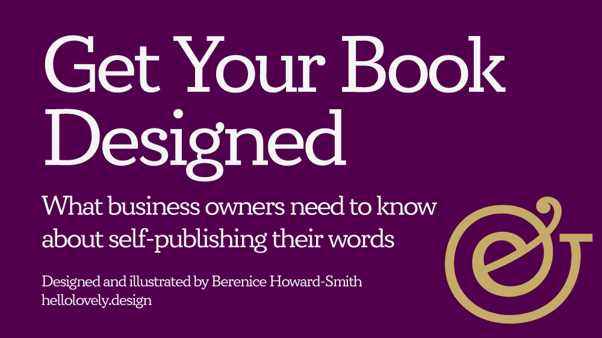
Berenice Howard-Smith has been designing books and advising authors for many years and this presentation explains the things that need to be considered before your book is ready for print. See examples and case studies of books that Berenice has designed at Hello Lovely Design
Click the image below to see the PDF of the slides Berenice used in the presentation ...
These are some links mentioned in the Q&A
- The Writers and Artists Yearbook is a must if you want to explore traditional publishing
- IngramSpark blog is full of useful advice
- KDP (Amazon’s self-publishing side) calculator
- Berenice's blog post on ISBNs

How can doodling improve your life and business?
Most people who doodle don’t know why they do it and the theories range from helping them to focus while listening, to just filling in time, to keeping their hands occupied.
People who don’t doodle often say they can’t draw and can’t really see the point, so why are we encouraging you to try it?
These are some of the benefits that doodling can bring in both personal and business situations:
* Unlock non-verbal thinking
Most business communication is verbal. Doodling sparks visual thinking, helping people express complex ideas, emotions, or systems they can’t easily put into words — and helping to generate ideas faster.
* Improve focus and retention
Doodling during meetings increases attention and recall — it’s not a distraction, it’s an anchor. The brain processes images far faster than words, making doodling a powerful tool for holding focus and avoiding overwhelm.
* Create a safe space to explore ideas
A shared creative activity with “no right answer” lowers the stakes. People show up more fully when they feel safe being messy or imperfect — and creative expression is linked to lower stress and improved mood, boosting resilience in high-pressure situations.
A doodle workshop isn’t about “art” — it’s about unlocking new ways of thinking, creating human connection, and building a creative work culture.
Rick Ruben in "The Creative Act" says that we are all creative and that while we may not be making art, we’re using information in different ways to create an experience. We hope that taking part in this exercise this will change the way you think about being a creative person!
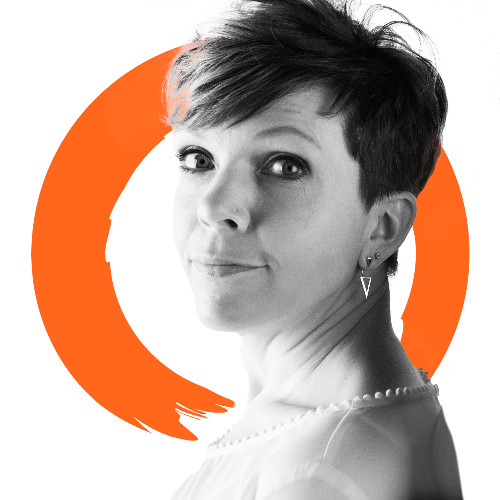 Anne-Marie Miller is a Creative Director and Visual Strategist at Carbon Orange with over 25 years’ experience helping organisations bring clarity to complex ideas through thoughtful brand design and visual communication. Her work focuses on creating visual systems that make things easier to understand, easier to use and easier to remember.
To make the most of this exercise you might want to have some sheets of A4 paper and a black marker pen to hand. Anne-Marie shows us how to use 12 very basic shapes to create many kinds of doodles!
Some immediately useful applications for small businesses to use their new-found skills is using this exercise in strategy sessions, creating a doodle that explains what impact your work has on the world or the benefit you bring to clients, and to relax, have fun and move away from linear and verbal thinking!

How societies thrive when everyone is included
What does society look like when everyone thrives?
Martyn Sibley explains how his work goes beyond the world of disability inclusion to exploring how societies truly thrive when everyone is included, by strengthening economies and communities, and creating wider benefits for everyone.
Martyn is a disability inclusion changemaker, entrepreneur, and author. His work examines the social, economic, and political systems that shape equality - and how inclusive design benefits everyone, not only disabled people.
As CEO and co-founder of Purple Goat, Martyn leads one of the world’s most inclusive marketing agencies, helping brands authentically represent disabled people and unlock the £300 billion “Purple Pound.”
Through Purple Changemakers, he educates and supports social entrepreneurs and activists to turn their vision into real-world impact, while Purple Collective drives policy and campaigning solutions where no one else has stepped up to act.
Martyn draws deeply from lived experience and nearly two decades of changemaking - from co-founding Disability Horizons, to co-building Accomable, an accessible-travel start-up later acquired by Airbnb. His work has been featured by the BBC, The Guardian, Forbes, and the Financial Times.
Named one of the UK’s most influential disabled people, Martyn’s mission is powered by the collective voice for disability inclusion - creating a future where accessibility, innovation, and belonging sit at the heart of how we all live, work, and travel.
Author of Everything is Possible, Martyn is frequently invited to take part in policy discussions with the UK Government and to address industry conferences across the globe as well as mentor industry leaders.
Find out more at martynsibley.com | purplegoatagency.com | purplecollectiveglobal.com
Read more about Martyn's life and work at https://martynsibley.com/ and connect with him on LinkedIn
Why you keep procrastinating and what to do about it.
Do you procrastinate?
Do people you work with wonder why you just don’t get on with things you’ve agreed to do and are perfectly capable of doing?
This can be seen as laziness or worse – perhaps it’s an indication that you’re not up to the job. It’s especially tough if you’re procrastinating about finding clients, making sales or doing client work because it affects your ability to get paid on time.
Or at all.
Even worse, the person saying all these awful things to you is often you. We can be our own worst critics – and that just makes it harder to get started. So let’s do our best to put all of that to one side, because if you’re neurodivergent it’s almost certainly not true, and it’s definitely not helpful.
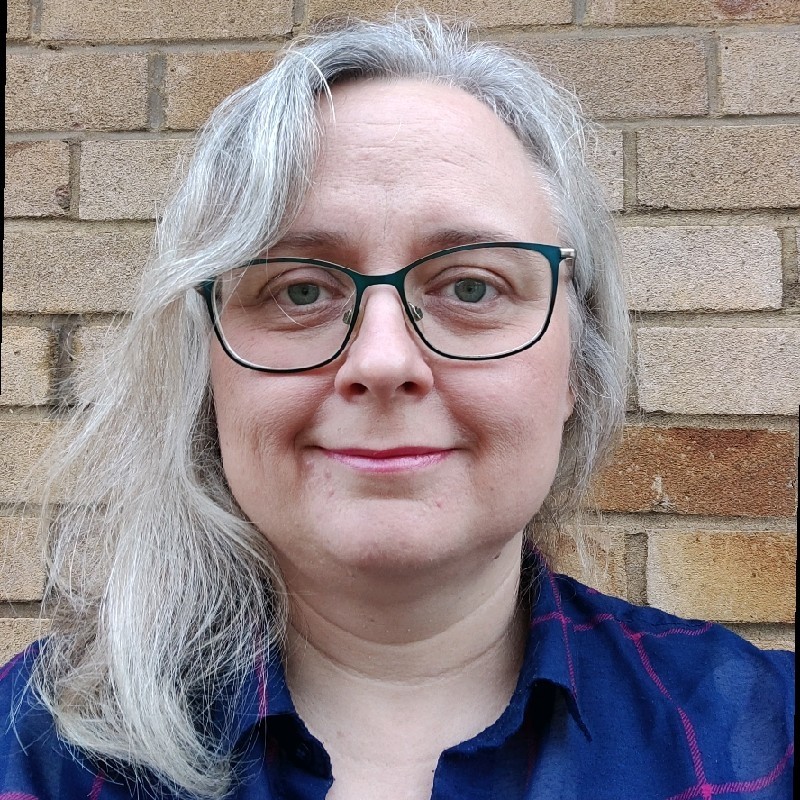
Helen Lindop helps neurodivergent small business owners, freelancers and university students to develop their executive function skills and/or build strategies to work around them. In this presentation Helen talks us through strategies that help to get things unstuck and grow executive function skills, the processes that help us get through daily life.
These work both for those with neurodivergent traits and are also helpful for neurotypical people who work with neurodivergent colleagues.
Find out more about Helen at https://helenlindop.com/
This is a PDF of the slides used in the video presentation for you to work through in your own time:

This is the quiz mentioned in the video:
Get Started Quiz
Helen is offering any member of Drive and guests a free 30 minute consultation to explore any questions you may have.
Why understanding neurodiversity is good for all of us
When neurodivergent traits are more widely understood we all benefit.
Nathan Whitbread talks about the impact his business has on the world.
With rapacious businesses making the world much worse than it needs to be for the sole purpose of making extremely rich people even richer, more and more independent, autonomous businesses owners are doing all they can to make an impact in a different way.
This interview with Nathan Whitbread explores how by making neurodivergent traits more easily understood we all benefit. The impact this has on the world is to make us all more tolerant of individual differences and to not expect all human beings to fit into systems that are often designed for a very specific demographic.
Find Nathan on LinkedIn and at The Neurodivergent Coach
Nathan mentions Jon Alexander, author of "Citizens: Why the answer to fixing everything is all of us."
For more interviews on how small, independent businesses make the world a better place see Impact Reports
Is your inner voice getting in the way of what you want to do?
We all have an inner voice.
While it’s good to be reminded that we need to stay safe and not take unnecessary risks, our internal voice can sometimes become a relentless and judgmental critic. Some people aren’t aware that this might be something that is holding them back, or perhaps pushing them towards perfectionism, stopping them from trying new things.
 David Brown PCC, MPhil(Sci) takes us through a five step exercise that explores how we can learn to befriend and transform our relationship with our inner critic into a force for good in our lives. Using Sovereign Centering provides some distance and a more calming perspective to situations that normally lead to stress and anxiety.
Step 1. Awareness: Think of a specific situation where your inner critic shows up (public speaking, making a sale, increasing prices, etc.,). What are the beliefs and judgements that come up?
Step 2. Pause and reflect. Don't act on any of the issues that come up.
Step 3. Accept the comments. Acknowledge that these judgements are alive and present.
Step 4. Centre or ground yourself (see video for instructions).
Step 5. Notice what new perspectives emerge.
David is offering a free one hour session to anyone who would like to explore how this issue affects your life and work. Get in touch at Potentiality Coaching
GEO - How AI has changed SEO
GEO - How AI has changed SEO
Whether or not SEO is important to your business, we all need to be aware that the world of Google and the way searches are handled has changed a lot and will continue to change as AI becomes more prevalent in this arena.
One of the questions addressed in the presentation below is “What should you be asking your web site developer to do to make sure AI search works on your site?”
Our guest speakers are Matt Jones, a software and consulting professional with 25+ years experience working with global brands such as Accenture and IBM and start-ups in the UK, Ireland and China and Tom Wright, an AI Strategy Consultant & Technology Advisor who helps SMEs & Nonprofits Navigate AI Implementation.
Find out more about Matt at https://www.noremo.uk/ and about Tom at https://www.p15.ai/
This presentation is designed to start a discussion so please get in touch with Matt or Tom if you have any questions. You can find them both on LinkedIn Matt Jones Tom Wright
The video below shows a series of slides with Matt and Tom talking about the main points.
Here are the slides for you to go through at your own pace:

If you have any questions about our Ask the Expert events please get in touch
Building communities by spreading kindness
Building a network of communities based on kindness
David Brown talks about the impact his business has on the world.
With rapacious businesses making the world much worse than it needs to be for the sole purpose of making extremely rich people even richer, more and more independent, autonomous businesses owners are doing all they can to make an impact in a different way.
This interview with David Brown explores how coaching people to explore and manage the hurt they are dealing with helps to stop that hurt from spreading.
By encouraging people to come together in communities to share this practice, the habit of spreading kindness grows and impacts all of us.
Get the free guide: The Sovereign Leadership Framework
Find David on LinkedIn and at Potentiality Coaching
David mentions Jon Alexander, author of "Citizens: Why the answer to fixing everything is all of us."
For more interviews on how small, independent businesses make the world a better place see Impact Reports
How to Navigate the Ethics of AI
What are the ethics of using AI?
There are many myths and many, many questions about the ethics of AI. From the use of other people's work to the use of the planet's resources to the claims of what it can and can't do, not to mention what it should and shouldn't do.
Tom Wright is an AI consultant who helps organisations adopt AI without compromising their values, moving beyond polarised debates to find practical solutions that work.
This presentation is designed to start a discussion to discover how to make AI decisions that balance innovation with responsibility whilst avoiding ethical paralysis.
The video below shows a series of slides with Tom talking about the main points.
Here are the slides for you to go through at your own pace:

Some links to issues discussed in the presentation:
* A good exploration of the water issue by Andy Masley: https://andymasley.substack.com/p/the-ai-water-issue-is-fake
* Hannah Ritchie, data scientist and writer, working at the intersection of environmental change, technology and global development: https://hannahritchie.com/
* Two of the academic papers that are used: https://arxiv.org/pdf/2506.17016 and https://arxiv.org/pdf/2311.16863
Video of Tom talking through the slides:
If you have any questions about the presentation or other aspects of AI you can connect with Tom on LinkedIn. or send us a message.
How to communicate the impact your business has on the world
Heather Davies is an impact and sustainability-focused copywriter and communications trainer. In this presentation she talks about the effective ways independent businesses can - and should - talk about the impact they have and how and why it's important to inspire and motivate others to do the same.
Just because micro-businesses are so intertwined with their founder and are quite often run from home, doesn't mean they aren't taking meaningful action. In fact, you could argue that pound for pound, they are actually doing a lot more!
We talked about how micro-businesses can stop greenhushing - a term many had never heard before - and start communicating the wonderful work they are doing to have positive social and environmental impact without falling into the trap of greenwashing.
Links mentioned during the Q&A
Follow Heather On LinkedIn
Switchfoot Accounting Impact Statement https://switchfootaccounting.co.uk/impact/
Climate Outreach and Information Network
https://climateoutreach.org/?btc_year_qv=2025
Green Claims Code https://www.gov.uk/government/publications/green-claims-code-making-environmental-claims
Advertising Standards Authority advice for different sectors
https://www.asa.org.uk/advice-and-resources/resource-library/greenclaims.html
Climate Outreach’s Britain Talks Climate & Nature Report
https://climateoutreach.org/btc/2025/report/
ACTionism Film
https://www.actionism.space/request-a-screening/
How to embrace digital sustainability
Andy Davies is a Digital Sustainability Professional who works with businesses to help reduce their digital carbon footprints by choosing low impact tech solutions.
This is the video of a presentation Andy used to explain how and why independent businesses can get started on making some changes.
The presentation was followed by a discussion and a Q&A that is covered below.
Find Andy on LinkedIn and at Sitegeist Web Services
The following topics were mentioned in the discussion and Q&A
- Test the carbon impact of your website here:https://www.websitecarbon.com/
- Then learn how to take action here:
https://sustainablewebdesign.org/ - Find sustainably minded hosting services here (I recommend Krystal https://krystal.io/) :
https://app.greenweb.org/directory/ - For more digital sustainability information sign up for the Curiously Green newsletter from Wholegrain Digital:
https://www.wholegraindigital.com/curiously-green/ - Read what Andy has written on Digital Sustainability for Wholegrain https://www.wholegraindigital.com/blog/category/digital-sustainability/
Specifics of things that came up on the call:
- An article about changing browsers: https://www.wholegraindigital.com/blog/can-browser-choice-help-digital-sustainability/
- Guidelines for optimising website media (Illustrators and digital designers will find this useful)
https://sustainablewebdesign.org/guidelines/2-15-take-a-more-sustainable-approach-to-image-assets/
Finally this is an eye opening primer on AI energy use:
https://www.technologyreview.com/2025/05/20/1116327/ai-energy-usage-climate-footprint-big-tech/
An example of a typical AI use case from the article:
Let’s say you’re running a marathon as a charity runner and organizing a fundraiser to support your cause. You ask an AI model 15 questions about the best way to fundraise.
Then you make 10 attempts at an image for your flyer before you get one you are happy with, and three attempts at a five-second video to post on Instagram.
You’d use about 2.9 kilowatt-hours of electricity—enough to ride over 100 miles on an e-bike (or around 10 miles in the average electric vehicle) or run the microwave for over three and a half hours.
The text, image, and video responses they requested add up to 2.9 kilowatt-hours of electricity.
In California, generating that amount of electricity would produce about 650 grams of carbon dioxide pollution on average. But generating that electricity in West Virginia might inflate the total to more than 1,150 grams.
If you have any questions for Andy just let us know and we'll forward them to him.
Learning to deal with change benefits all our relationships
Some people embrace change and others resist it. When we learn how to work with this all our relationships benefit.
Jo Twiselton talks about how her business has a positive impact on the world.
With rapacious businesses making the world much worse than it needs to be for the sole purpose of making extremely rich people even richer, more and more independent, autonomous businesses owners are doing all they can to make an impact in a different way.
Jo explains how her work in organisations, helping people recognise that we all deal with change differently, can be used in local community and neighbourhood groups to create an understanding of differences, learn how we deal with fear and make sure no-one is left behind.
Find Jo on LinkedIn and at Twist Consultants
We mention Ellie Meredith and the ACTionism movement.
For more interviews on how small, independent businesses make the world a better place see Impact Reports